
Easy Maintenance
Nipple union extension simplifies sensor removal and servicing without disturbing the complete thermocouple installation


Mineral Insulated Thermocouple with Head and Nipple Union Extension
The MGO-PAC Industrial Thermocouple with Connection Head and Nipple Union Extension is engineered for reliable process temperature measurement and easier field maintenance. Its rugged mineral-insulated sensing element, configurable connection head, and removable nipple-union extension provide a practical solution for demanding industrial and OEM applications where measurement reliability, serviceability, and installation flexibility are essential.
Nipple union extension simplifies sensor removal and servicing without disturbing the complete thermocouple installation

Mineral-insulated construction provides dependable temperature measurement and mechanical durability for demanding industrial process environments

Choose aluminum, stainless steel, cast iron, polypropylene, explosion-proof, or transmitter-style heads to suit the installation.

Connection head can accommodate terminal blocks, standard 4–20 mA transmitters or HART-enabled transmitters for process instrumentation

Field-mount temperature transmitter and display configurations provide local temperature indication directly at the measurement point

Nipple, nipple-union, or fitting-union-nipple extensions are available with selectable extension lengths and materials
 Chemical
 Oil & Gas
 Power Generation
 Pulp & Paper
 Heat Treatment
 Steel & Metal
 Food & Beverage
 Pharmaceutical
 OEM Process
Review the standard specifications and available configuration options for the TC80 Industrial senosr with Connection Head Thermocouple. Product dimensions, materials, temperature ratings, and optional features may vary depending on the selected configuration
Technical specifications, dimensions, ordering information, and configuration options for the TC80 Thermocouple

Installation, wiring, maintenance, and troubleshooting instructions for the TC80 Thermocouple.
Download file →Instructions d'installation, de câblage, de maintenance et de dépannage pour le thermocouple de palier TC80
Download file →Complete your installation with compatible mounting accessories, connectors, and replacement components for the TC80 Thermocouple.
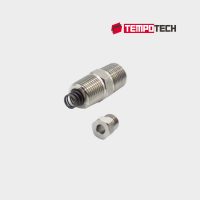
Spring loaded oil seal fitting: These fittings are used to install thermocouples and RTDs with thermowells, protection tube. Spring loaded A spring-loaded thermocouple fitting is a type of fitting used to ensure…
Find more…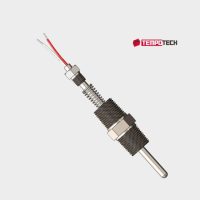 Read
Read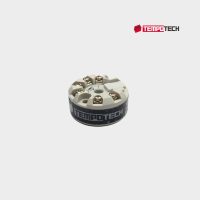
In industries where accuracy is crucial and time is of the essence, the Head Mount Transmitter with -USB proves to be a dependable choice for temperature measurement. This versatile, loop-powered transmitter, designed…
Find more…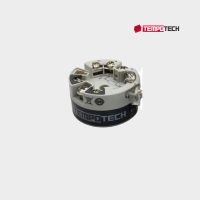
The TT-267 temperature transmitters are engineered for versatile use in the process industry, delivering exceptional accuracy with sensor-transmitter matching and robust protection against electromagnetic interference. Configurable via the HART® protocol, these transmitters…
Find more…Discover related products and accessories to complete your temperature measurement solution.
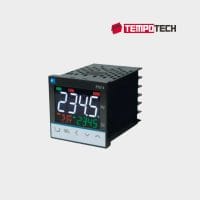
The Fuji Electric PXF4 temperature controller provides a variety of input and output options along with advanced control features, making it ideal for a broad spectrum of applications. You can select from…
Find more…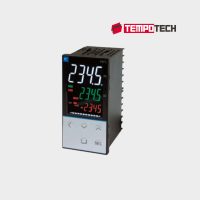
The Fuji Electric PXF4 temperature controller provides a variety of input and output options along with advanced control features, making it ideal for a broad spectrum of applications. You can select from…
Find more…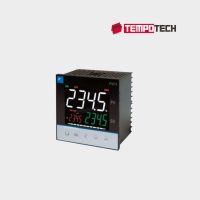
The Fuji Electric PXF4 temperature controller provides a variety of input and output options along with advanced control features, making it ideal for a broad spectrum of applications. You can select from…
Find more…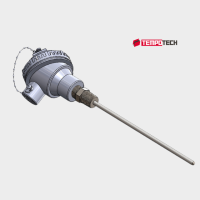 View Product
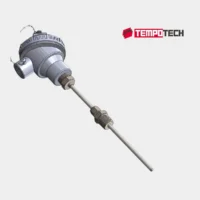 View Product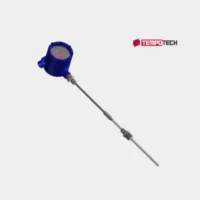
TC90 is a Remote Mount Industrial Thermocouple is a temperature-sensing device designed for applications where the sensing element needs to be installed at a distance from the measuring or control system. It…
Find more…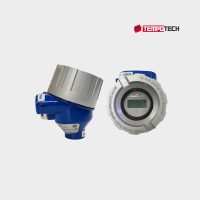
The TT-467 temperature transmitters are engineered for versatile use in the process industry, delivering exceptional accuracy with sensor-transmitter matching and robust protection against electromagnetic interference. Configurable via the HART® protocol, these transmitters…
Find more…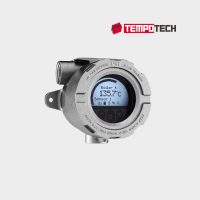
The TT-567 temperature transmitters are engineered for versatile use in the process industry, delivering exceptional accuracy with sensor-transmitter matching and robust protection against electromagnetic interference. Configurable via the HART® protocol, these transmitters…
Find more…Watch product overview, installation, and application videos for the TC80 Thermocouple
A temperature transmitter takes the temperature data from a sensor, like an RTD or thermocouple, and converts it into a standard signal, usually 4-20mA or 0-10V. This signal can be sent to control systems, PLCs, or monitoring equipment to keep track of temperature in real-time.
Video Transcription: Temperature Transmitter Technology & Application
[00:05] A temperature transmitter is a critical component in industrial automation that converts low-level sensor signals into standardized outputs. This ensures accurate, reliable, and long-distance signal transmission for complex control systems.
[00:14] Thermocouple and RTD sensors are the industry standards for measuring the temperature of processed media. However, in challenging environments—characterized by high temperatures, electromagnetic interference (EMI), or long cable runs—the raw signals from these sensors can degrade.
[00:33] This signal degradation, often caused by wire resistance and electrical noise, can lead to inaccurate readings. To mitigate these issues, temperature transmitters are used to amplify, condition, and convert sensor data into a standardized 4-20mA output, ensuring high-integrity data across the plant.
[00:59] Several signal types are used depending on the application:
4 to 20 mA Analog Signal: The most common standard, highly resistant to noise and ideal for long distances.
0 to 10V: A common analog option, though more susceptible to signal loss over length.
Digital Signals (HART & Modbus): Used for advanced remote communication and diagnostics.
RS485/RS232: Essential for integrating transmitters with PLCs and SCADA systems.
[01:35] The Tempotech TT367 series temperature transmitters are engineered for versatility. They offer precise sensor-transmitter matching and robust protection against interference. Configurable via the HART protocol, these units allow for easy setup and reliable field operation.
[01:56] Key reliability features include open/short-circuit detection, incorrect wiring alerts, and NAMUR NE43 failure standards. The TT367 supports RTD, TC, Ohm, and Millivolt inputs, making it a universal solution for your instrumentation needs.
[02:26] With integrated dot-matrix displays and easy configuration options, our transmitters provide the precision you can trust. Contact our technical sales team today to find the best transmitter for your application.
A thermowell is a protective casing that houses temperature sensors like RTDs or thermocouples, keeping them safe from high pressure, corrosion, or physical damage. It allows you to measure temperature in harsh environments without worrying about damaging the sensor itself.
[00:04] A thermowell plays a critical role in protecting temperature sensors, ensuring system safety, and extending the lifespan of your equipment. It also enables easy sensor maintenance without depressurizing the system.
[00:15] To achieve reliable readings, it is essential to understand proper thermowell placement and industry best practices.
[00:23] A primary rule of thumb for insertion length is to insert the thermowell 1/3 to 2/3 of the way into the process fluid. Alternatively, consider an insertion length 10 times the thermowell tip diameter, or at least 2 inches into the process media.
[00:33] Caution is required: excessive thermowell length can cause vibration from fluid flow, leading to resonance, mechanical fatigue, and potential failure. Conversely, a thermowell that is too short results in poor heat transfer, leading to a slow response time and unreliable temperature data.
[00:55] For inline installation, thermowells should be offset at angles to avoid interference and allow for easy maintenance access.
[01:06] Maintain a spacing of 10 to 100 times the pipe diameter (typically 25 times) to ensure accurate readings and maintain laminar flow within the process.
[01:16] In elbow installations, the thermowell can face upstream to avoid mixing and swirling effects, or downstream where flow turbulence may influence the sensor. Upstream installation is generally preferred for maximum accuracy.
[01:35] Other critical factors to consider include pipe size, the type of process fluid, flow velocity, and distance from surrounding instruments.
[01:46] Thanks for watching this guide. For high-quality ANSI-standard thermowells and sensors, visit www.tempotechcontrols.com.
Open the product configurator to select available options and prepare your configuration.
Find answers to common questions about the TC80 Thermocouple
The nipple-union extension provides easier access for installation and maintenance and allows sections of the assembly to be disconnected without disturbing the entire thermocouple installation. This is particularly useful where periodic inspection, calibration, or element replacement is required.
Yes. The connection head can be supplied with a ceramic terminal block, standard 4–20 mA transmitter, 4–20 mA transmitter with HART, or as a blank head ready for transmitter installation.
Yes. The TC80 datasheet provides thermowell options for ordering the thermowell with the thermocouple assembly. Thermowell selection should be based on process temperature, pressure, media, flow conditions, material compatibility, insertion length, and installation requirements.
The TC80 offers aluminum, stainless steel, cast iron, polypropylene, explosion-proof, and field-mount transmitter/display head options. Selection should consider ambient conditions, corrosion, wiring requirements, hazardous-area classification where applicable, and whether local indication or a transmitter is required.
A Nipple (N) provides a simple extension between the connection head and process side but does not include a union for easy disassembly. A Nipple-Union (NU) adds a union, allowing the thermocouple assembly to be disconnected more easily during maintenance without rotating the complete assembly. A Fitting-Union-Nipple (NUN) adds a process-side fitting along with the union and nipple, providing a more complete and serviceable connection between the thermowell/process and connection head. The best configuration depends on the installation arrangement and maintenance requirements.
The nipple-union extension makes installation, removal, and maintenance easier by allowing the assembly to be separated without disturbing the complete installation. This is especially useful where regular sensor inspection or replacement is expected.