
Multiple Thermocouple
Available in Type J, K, E, N, and T thermocouples to suit diverse industrial temperature measurement applications.


MGO-PAC Replacement Thermocouple Element for Industrial Thermocouple Assemblies
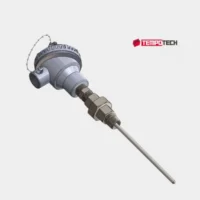
Rather replace just the sensing element than the whole assembly. The TC15 MGO-PAC Replacement Thermocouple Probe is intended to enable accurate temperature measurement and at the same time help lower maintenance costs and reduce equipment downtime. It is manufactured with a durable mineral insulated (MgO) construction so that it can deliver reliable performance in harsh industrial environments and is available in a variety of thermocouple types, sheath materials, diameters, lengths, and junction arrangements. Since it is designed for use with OEM equipment, for maintenance replacements and for custom industrial assemblies, the TC15 offers a reliable and configurable option for replacing defective or damaged thermocouple elements while prolonging the service life of the existing temperature sensor assemblies.
Available in Type J, K, E, N, and T thermocouples to suit diverse industrial temperature measurement applications.

Configurable sheath materials, probe diameters, immersion lengths, junction styles, fittings, and connectors simplify OEM integration and replacement projects.

Premium sheath materials including Inconel® 600 and Incoloy® 800 provide reliable operation in demanding high-temperature process environments.

Designed to replace worn thermocouple sensing elements while reusing existing thermowells, heads, and process connections, reducing maintenance costs.

Spring-loaded design maintains proper thermowell contact for accurate, stable, and repeatable temperature measurement throughout industrial operation.
Calibration available upon request to support quality assurance, traceability, and critical industrial temperature measurement applications.
 OEM replacment
 Oil and Gas
 Power
Power
 Chemical Plant
 Incineration
 Industrial Equipment
Review the standard specifications and available configuration options for the TC15 replacment Thermocouple. Sheath diameter, insertion length, thermocouple type, lead wire, insulation, connector style, temperature rating, and optional features may vary depending on the selected configuration and application requirements
Technical specifications, dimensions, ordering information, and configuration options for the TC15 replacement Thermocouple

Installation, wiring, maintenance, and troubleshooting instructions for the TC15 Immersion Thermocouple.
Download file →Instructions d'installation, de câblage, de maintenance et de dépannage pour le thermocouple de palier TC15
Download file →Complete your installation with compatible mounting accessories, connectors, and replacement components for the TC15 Thermocouple.
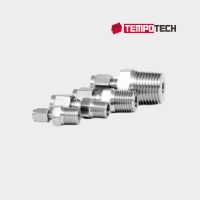
Thermocouple fitting is used in applications where a thermocouple needs to be connected to a an application, control system, or other measurement instruments. The fitting ensures that the thermocouple wire is securely…
Find more…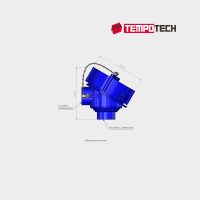
TempoTech’s Thermocouple connection heads are enclosures designed to house the thermocouple junction and provide a safe, protected environment for the connections to the temperature measurement system. These heads are typically used in…
Find more…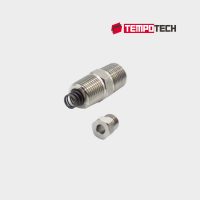
Spring loaded oil seal fitting: These fittings are used to install thermocouples and RTDs with thermowells, protection tube. Spring loaded A spring-loaded thermocouple fitting is a type of fitting used to ensure…
Find more…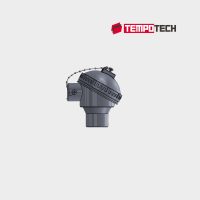
TempoTech’s Thermocouple connection heads are enclosures designed to house the thermocouple junction and provide a safe, protected environment for the connections to the temperature measurement system. These heads are typically used in…
Find more…TempoTech’s Thermocouple connection heads are enclosures designed to house the thermocouple junction and provide a safe, protected environment for the connections to the temperature measurement system. These heads are typically used in…
Find more…Discover related products and accessories to complete your temperature measurement solution.
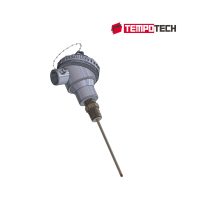
BRTD70- An Industrial RTD (Resistance Temperature Detector) without extension is a high-accuracy industrial temperature sensor designed for direct insertion into a process or surface without the use of thermowells. These RTDs are…
Find more…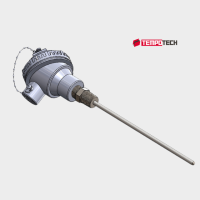
RTD70- An Industrial RTD (Resistance Temperature Detector) without extension is a high-accuracy industrial temperature sensor designed for direct insertion into a process or surface without the use of thermowells. These RTDs are…
Find more…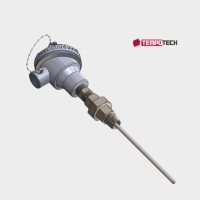
Key Features:- Uses connection head to protect the electrical connections from environmental factors such as moisture, dust, and mechanical damage. Nipple Union Nipple (NUN) Nipple-Union (NU), Nipple(N) options available easy replacement and…
Find more…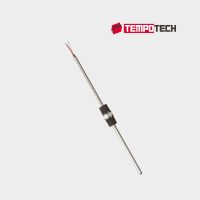 View ProductView Product
 View Product
Watch product overview, installation, and application videos for the TC15 Thermocouple
PT2M44S
A temperature transmitter takes the temperature data from a sensor, like an RTD or thermocouple, and converts it into a standard signal, usually 4-20mA or 0-10V. This signal can be sent to control systems, PLCs, or monitoring equipment to keep track of temperature in real-time.
Video Transcription: Temperature Transmitter Technology & Application
[00:05] A temperature transmitter is a critical component in industrial automation that converts low-level sensor signals into standardized outputs. This ensures accurate, reliable, and long-distance signal transmission for complex control systems.
[00:14] Thermocouple and RTD sensors are the industry standards for measuring the temperature of processed media. However, in challenging environments—characterized by high temperatures, electromagnetic interference (EMI), or long cable runs—the raw signals from these sensors can degrade.
[00:33] This signal degradation, often caused by wire resistance and electrical noise, can lead to inaccurate readings. To mitigate these issues, temperature transmitters are used to amplify, condition, and convert sensor data into a standardized 4-20mA output, ensuring high-integrity data across the plant.
[00:59] Several signal types are used depending on the application:
4 to 20 mA Analog Signal: The most common standard, highly resistant to noise and ideal for long distances.
0 to 10V: A common analog option, though more susceptible to signal loss over length.
Digital Signals (HART & Modbus): Used for advanced remote communication and diagnostics.
RS485/RS232: Essential for integrating transmitters with PLCs and SCADA systems.
[01:35] The Tempotech TT367 series temperature transmitters are engineered for versatility. They offer precise sensor-transmitter matching and robust protection against interference. Configurable via the HART protocol, these units allow for easy setup and reliable field operation.
[01:56] Key reliability features include open/short-circuit detection, incorrect wiring alerts, and NAMUR NE43 failure standards. The TT367 supports RTD, TC, Ohm, and Millivolt inputs, making it a universal solution for your instrumentation needs.
[02:26] With integrated dot-matrix displays and easy configuration options, our transmitters provide the precision you can trust. Contact our technical sales team today to find the best transmitter for your application.
A thermowell is a protective casing that houses temperature sensors like RTDs or thermocouples, keeping them safe from high pressure, corrosion, or physical damage. It allows you to measure temperature in harsh environments without worrying about damaging the sensor itself.
[00:04] A thermowell plays a critical role in protecting temperature sensors, ensuring system safety, and extending the lifespan of your equipment. It also enables easy sensor maintenance without depressurizing the system.
[00:15] To achieve reliable readings, it is essential to understand proper thermowell placement and industry best practices.
[00:23] A primary rule of thumb for insertion length is to insert the thermowell 1/3 to 2/3 of the way into the process fluid. Alternatively, consider an insertion length 10 times the thermowell tip diameter, or at least 2 inches into the process media.
[00:33] Caution is required: excessive thermowell length can cause vibration from fluid flow, leading to resonance, mechanical fatigue, and potential failure. Conversely, a thermowell that is too short results in poor heat transfer, leading to a slow response time and unreliable temperature data.
[00:55] For inline installation, thermowells should be offset at angles to avoid interference and allow for easy maintenance access.
[01:06] Maintain a spacing of 10 to 100 times the pipe diameter (typically 25 times) to ensure accurate readings and maintain laminar flow within the process.
[01:16] In elbow installations, the thermowell can face upstream to avoid mixing and swirling effects, or downstream where flow turbulence may influence the sensor. Upstream installation is generally preferred for maximum accuracy.
[01:35] Other critical factors to consider include pipe size, the type of process fluid, flow velocity, and distance from surrounding instruments.
[01:46] Thanks for watching this guide. For high-quality ANSI-standard thermowells and sensors, visit www.tempotechcontrols.com.
Open the product configurator to select available options and prepare your configuration.
Find answers to common questions about the TC15 thermocouple
The TC15 is designed as a replacement sensing element for industrial thermocouple assemblies such as TC70, TC80, and similar designs. To ensure compatibility, match the thermocouple type, sheath diameter, immersion length, process bushing, and spring-loaded fitting with your existing assembly.
Yes. The TC15 is available with or without spring-loaded bushings, allowing it to match your existing thermocouple assembly and installation requirements.
Yes. The TC15 can be configured with different thermocouple types, sheath materials, sheath diameters, immersion lengths, lead wire insulation, and process bushings to replace existing OEM thermocouple elements.
If the thermowell, connection head, and process connection remain in good condition, replacing only the TC15 sensing element is a cost-effective solution that reduces maintenance costs and minimizes equipment downtime.
Yes. In many cases, the TC15 can be manufactured to replace thermocouple elements from other manufacturers. To ensure compatibility, provide the existing thermocouple type, sheath diameter, immersion length, spring-loaded fitting or bushing details, and process connection dimensions. Our engineering team can help configure a replacement element that fits your existing assembly without replacing the complete sensor.
If the thermowell, connection head, extension hardware, and process connection are still in good condition, only the sensing element typically needs to be replaced. The TC15 MGO-PAC Replacement Thermocouple Element is specifically designed for this purpose, allowing you to restore accurate temperature measurement while reducing replacement costs, minimizing downtime, and extending the service life of your existing thermocouple assembly.