

Type E Thermocouple: Temperature Measurement Guide
By TempoTech Controls Inc Editorial Team · Updated 2026-08-10
What Is a Type E Thermocouple?
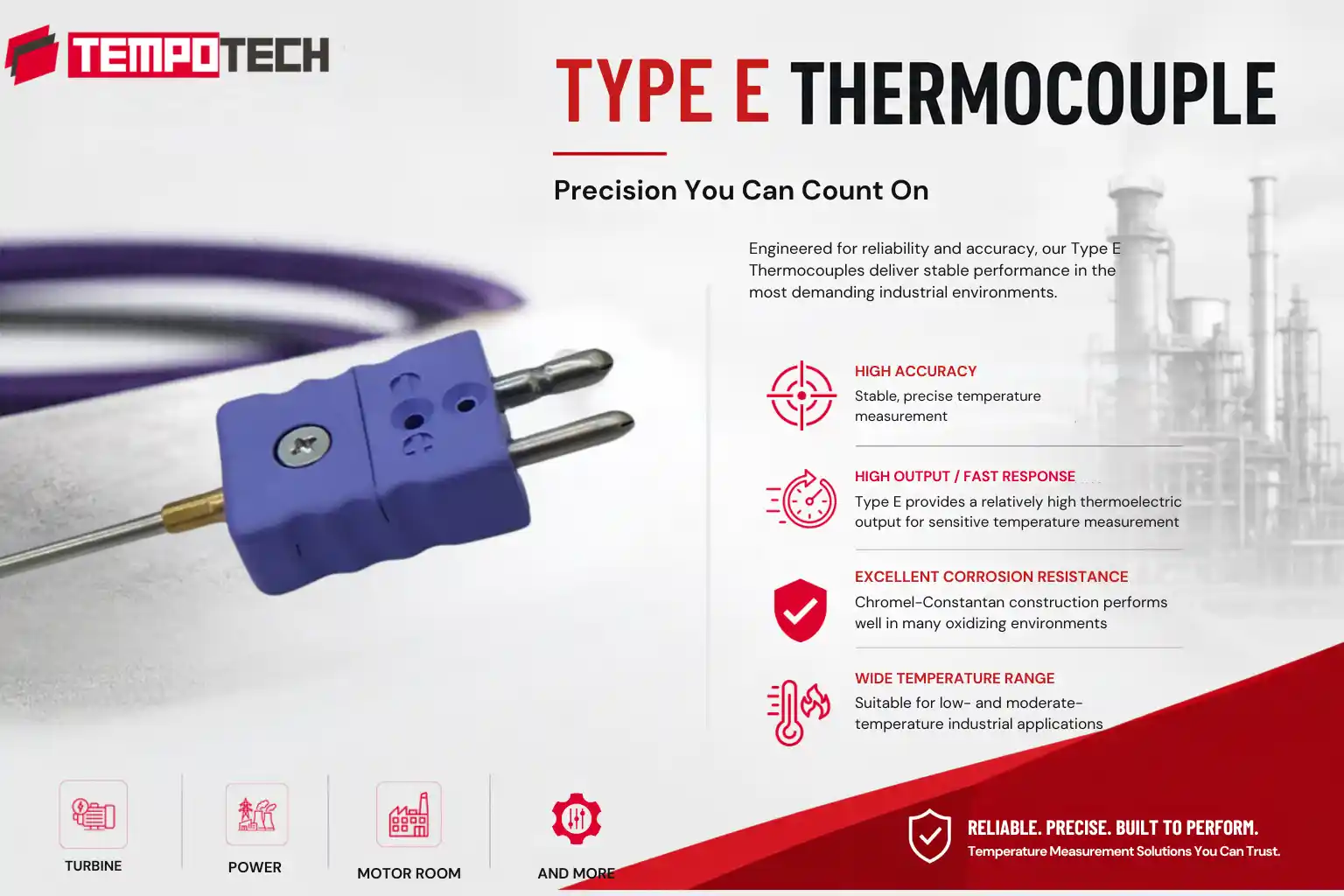
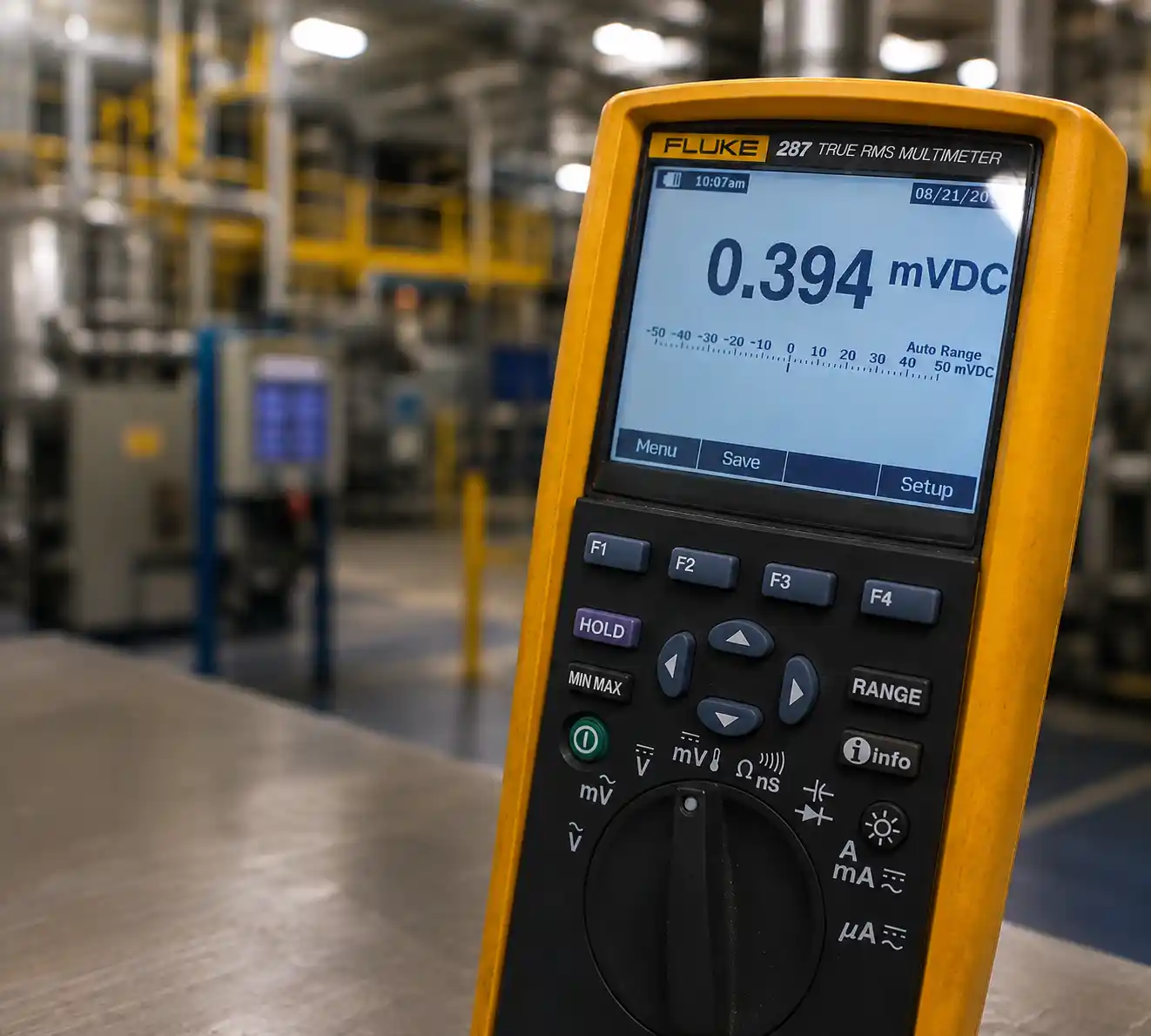
A type E thermocouple pairs a nickel-chromium positive leg with a copper-nickel (constantan) negative leg to generate a voltage signal proportional to temperature. Type E thermocouples are known for their high millivolt output among commonly used thermocouple types, giving instrumentation engineers a strong, easily measured reading even in demanding environments. For specifiers who need clean data with minimal signal conditioning, that output advantage matters at the design stage.
TempoTech specializes in application-specific sensor engineering, building contact thermocouples alongside RTDs and infrared sensors for industrial temperature measurement. Process instrumentation teams rely on that specialization when standard, off-the-shelf sensors cannot meet a demanding application. More than three decades of industry expertise back TempoTech’s temperature measurement solutions, giving thermal systems designers a proven engineering partner rather than a generic supplier.
Why Does the Millivolt Output Matter for Instrumentation Design?
Higher millivolt output reduces the impact of electrical noise on the measured signal. Engineers working in electrically noisy plant environments, such as motor rooms , Power Generation Turbine or near variable-frequency drives, benefit from a sensor that produces a robust baseline signal rather than one requiring heavy amplification.
Key characteristics of the type E junction:
- Positive leg: nickel-chromium alloy
- Negative leg: copper-nickel (constantan) alloy
- Signal strength: high millivolt output among commonly used thermocouple types
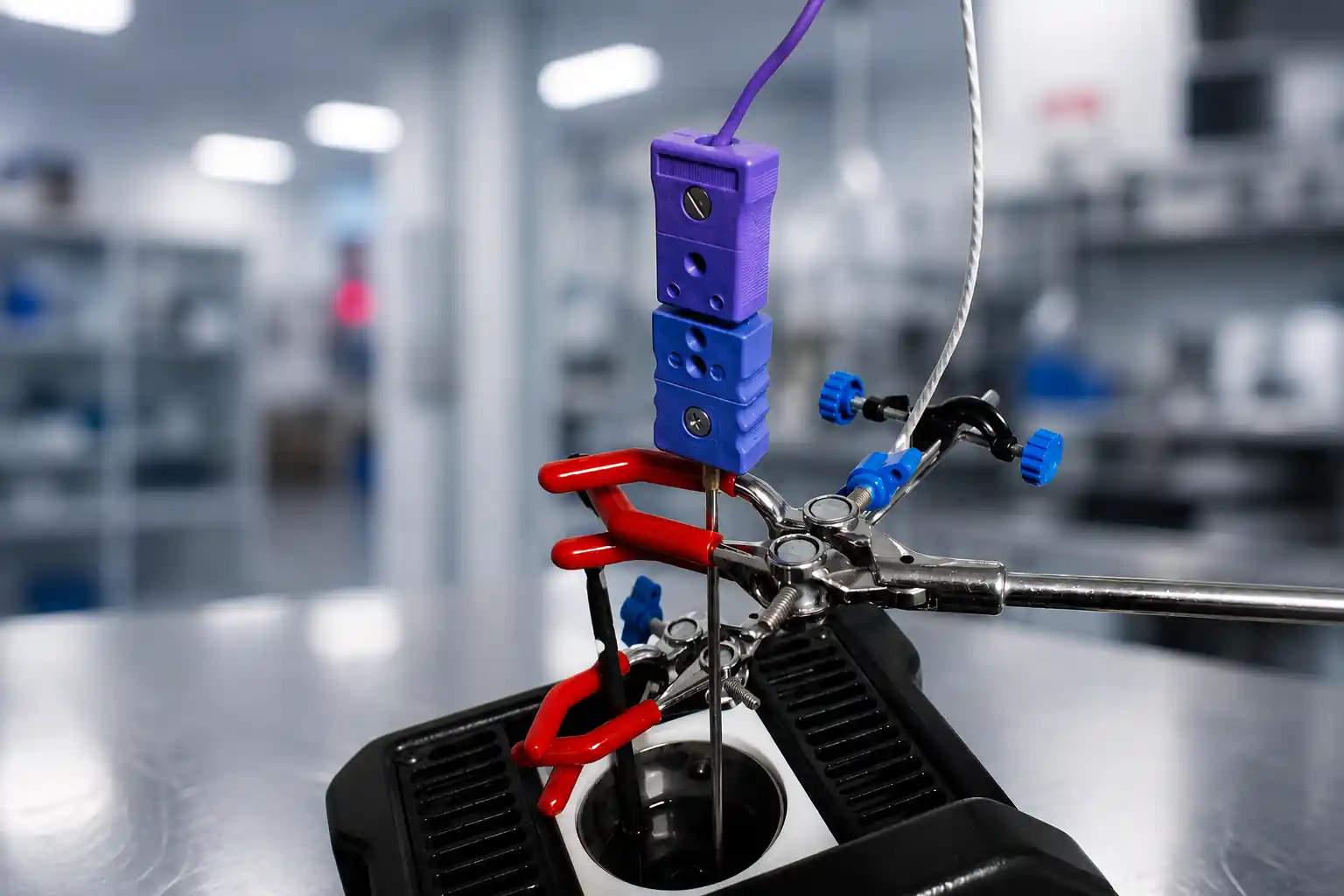
- Junction type: contact thermocouple, suited to direct-contact temperature sensing
Instrumentation technicians specifying sensors for cryogenic, aviation, or power generation processes often start with type E because of this signal characteristic, then work with TempoTech’s engineering team to tailor sheath materials, lengths, and termination styles to the specific installation.
What Temperature Range Can Type E Handle?
Thermocouple-grade Type E wire spans -454°F to 1600°F (-270°C to 870°C), covering everything from cryogenic testing to moderate industrial heat. This span defines the type e thermocouple temperature range and sets it apart from sensors built for lower-precision, high-heat service. Specifiers working near the extreme cold end gain a sensor that stays stable where many alternatives falter.
Extension-grade Type E wire operates within a much tighter band: 32°F to 392°F (0°C to 200°C). This wire connects the sensing junction to instrumentation and controllers rather than measuring process temperature directly. Confusing the two ratings during installation risks signal error. Engineers should verify which grade is specified before wiring a measurement loop.
Why does Type E have two different temperature ratings?
Thermocouple-grade wire forms the actual sensing junction and must tolerate the full process environment, including extreme cold. Extension-grade wire only needs to carry the millivolt signal back to a controller, so manufacturers rate it for a narrower, more moderate range.
Is Type E suitable for cryogenic applications?
Yes. The lower boundary of -454°F (-270°C) places Type E among the few thermocouple types viable for cryogenic and low-temperature research. Process engineers selecting sensors for sub-zero conditions gain reliable performance without switching thermocouple families.
TempoTech Controls Inc engineers custom sensor assemblies built for these exact conditions, giving process teams high-quality temperature sensors matched to demanding measurement environments across full operating ranges.
How Does Type E Compare to Type K?
Signal strength separates these two sensor types at moderate temperatures. A type E thermocouple delivers stronger signal output. Higher accuracy than Type K or Type J at ranges of 1,000°F and below. That distinction matters most for process engineers working in mid-range thermal environments where measurement precision directly affects product quality and equipment safety.
Why Does Type E Outperform Type K at Lower Temperatures?
Nickel-chromium/constantan construction gives Type E a higher millivolt output per degree than Type K’s nickel-chromium/nickel-alumel pairing. This stronger type E thermocouple millivolt output reduces signal noise and improves reading resolution in applications below 1,000°F. Engineers specifying sensors for moderate-heat processes gain a meaningful accuracy advantage without added system complexity.
When Should Engineers Choose Type E Over Type K?
The type e vs type k thermocouple decision generally comes down to operating range and required precision. Type E suits processes staying within its moderate-temperature zone, while Type K tolerates broader, higher-heat extremes.
TempoTech Controls Inc addresses this selection challenge directly. The company is recognized for custom-engineered solutions built around complex temperature measurement applications, including exactly this comparison. Every sensor produced moves through facilities certified under international quality management standards, matched to each customer’s specific product requirements. That certification framework gives process engineers, instrumentation technicians, and thermal systems designers confidence that sensor performance data reflects rigorous, repeatable manufacturing practices rather than generic specifications pulled from a catalog.
Where Are Type E Thermocouples Used?
Cryogenic labs, aircraft systems, and power plants rely on Type E thermocouple applications for demanding thermal measurement work. Extreme cold destroys ordinary sensors, and unstable readings at low temperatures cost engineers hours of recalibration and lost process data. The combination of an extended type e thermocouple temperature range. A strong electrical signal makes this sensor a practical fit for environments where precision cannot slip.
Why does Type E suit cryogenic and aviation environments?
The temperature span of -454°F to 1600°F (-270°C to 870°C) gives Type E sensors reach into deep-cold conditions that many thermocouple types cannot handle reliably. Paired with a high type e thermocouple millivolt output among commonly used thermocouples, the design supports strong, stable signal transmission even at the low end of that range. This pairing of range and output strength explains its regular use in aviation instrumentation and power generation monitoring. Accuracy at extreme conditions directly affects safety and system performance.
What does TempoTech offer specifiers working in these fields?
Process engineers and instrumentation technicians do not need to force a generic sensor into a specialized application. TempoTech’s engineering mission centers on delivering custom-built temperature sensor solutions, built to match exact process conditions rather than approximate them. Reliability stays paired with competitive pricing, so specifiers get precision without an inflated budget line.
Specifiers working on cryogenic, aviation, or power generation projects can contact TempoTech directly to discuss application requirements. Engineering teams match sensor configuration to the demands of each installation, ensuring the selected type e thermocouple performs where standard off-the-shelf options fall short.
How Do You Select the Right Type E Sensor?
Selection starts with matching sensor construction to the process conditions a facility actually runs. Custom-engineered assemblies outperform stock sensors because they account for sheath material, junction type, and mounting hardware specific to the installation. TempoTech’s engineering team designs and manufactures custom sensor assemblies, giving specifiers the ability to configure a type e thermocouple around exact application requirements rather than forcing a process to fit a generic part.
Wiring accuracy matters just as much as sensor design. Signal integrity depends on maintaining the correct type e thermocouple color code throughout the extension wire run and at every instrument connection. A mismatched color code introduces measurement error before the signal ever reaches the controller. Technicians should verify polarity and wire type against ANSI conventions during installation, not after startup.
What role does supplier support play in sensor selection?
Long-term reliability depends on more than the initial spec sheet. TempoTech maintains a stated commitment to continuous growth. Opportunity, supporting customers and suppliers as sensor designs evolve alongside changing process demands. That ongoing development relationship helps specifiers adjust configurations as equipment ages or process parameters shift.
Which factors should guide a final sensor decision?
Four factors consistently drive a sound selection:
- Process temperature ceiling relative to the sensor’s rated range
- Atmosphere compatibility (oxidizing, inert, or reducing conditions)
- Custom assembly needs, including sheath diameter and termination style
- Wiring verification, confirming color-coded extension wire matches instrument inputs
Engineers who weigh these factors together, rather than in isolation, reduce the risk of premature sensor failure and costly recalibration cycles.
Type E thermocouples represent a proven solution for demanding industrial temperature measurement applications where reliability and accuracy are essential. Their nickel-chromium and copper-nickel composition delivers consistent performance across moderate temperature ranges, making them the preferred choice for aluminum foundries, chemical plants, and steel mills. By selecting a Type E thermocouple engineered to your specific process requirements, you invest in precision instrumentation that enhances operational efficiency and supports your production excellence.
Key Takeaways
- Type E thermocouples provide high sensitivity and strong thermoelectric output for reliable temperature measurement.
- Chromel-Constantan construction provides good corrosion resistance in many industrial environments.
- Industrial applications include low- and moderate-temperature processes where sensitivity and measurement stability are important.
Related Reading To deepen your understanding of bearing temperature monitoring, you may find these related posts helpful: