
Guide Tube Multipoint
Multiple thermocouples are positioned inside individual guide tubes to measure temperature at different points along one assembly


Guide Tube Multipoint Thermocouple for Precise Temperature Profiling in Reactors, Columns and Process Equipment
Measure temperature at multiple points throughout critical process equipment with the MPTC-04 Guide Tube Multipoint Thermocouple. Individual MGO-PAC thermocouples are installed inside guide tubes and positioned at different sensing locations to provide a detailed temperature profile across the process. Designed for reliable handling and field maintenance, the MPTC-04 is well suited for reactors, distillation columns, heat exchangers, separation systems and chemical processing applications where monitoring temperature gradients and maintaining precise process control are essential
Multiple thermocouples are positioned inside individual guide tubes to measure temperature at different points along one assembly

Mineral-insulated thermocouple elements provide rugged construction for demanding process environments

Each sensing point can be positioned at a specified distance from the probe tip to match the required process measurement locations

Multiple thermocouple types allow the sensor assembly to be configured for different process requirements

Measures temperature at multiple locations along a single sensor for detailed temperature profiling

Multipoint assemblies can be configured using a variety of available materials to suit different process and operating requirements
 Distillation Column
 Reactor
 Heat Exchanger
 Polymerization
 Chemical
 Crude Oil Desalting
 Catalytic Cracking
Visbreaking
Catalytic Cracking
Visbreaking
Review the standard specifications and available configuration options for the MPTC-04 Multipoint Thermocouple . Product dimensions, materials, temperature ratings, and optional features may vary depending on the selected configuration
Technical specifications, dimensions, ordering information, and configuration options for the MPTC-04 Multipoint Thermocouple

Installation, wiring, maintenance, and troubleshooting instructions for the MPTC-04 Thermocouple.
Download file →Instructions d'installation, de câblage, de maintenance et de dépannage pour le thermocouple de palier MPTC-04
Download file →Complete your installation with compatible mounting accessories, connectors, and replacement components for the MPTC-04 Thermocouple.
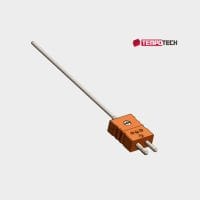 Read
Read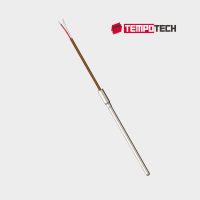 Read
Read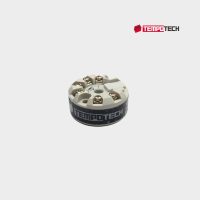
In industries where accuracy is crucial and time is of the essence, the Head Mount Transmitter with -USB proves to be a dependable choice for temperature measurement. This versatile, loop-powered transmitter, designed…
Find more…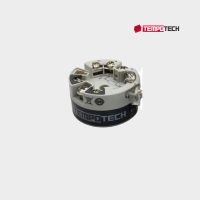
The TT-267 temperature transmitters are engineered for versatile use in the process industry, delivering exceptional accuracy with sensor-transmitter matching and robust protection against electromagnetic interference. Configurable via the HART® protocol, these transmitters…
Find more…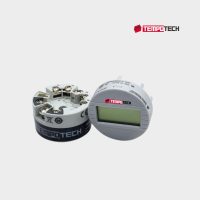
The TT-367 temperature transmitters are engineered for versatile use in the process industry, delivering exceptional accuracy with sensor-transmitter matching and robust protection against electromagnetic interference. Configurable via the HART® protocol, these transmitters…
Find more…Discover related products and accessories to complete your temperature measurement solution
 View Product
 View Product
Temperature is a critical parameter in all systems, regardless of the process. In every heating or cooling system, variations occur throughout the medium—temperature gradients always exist. In many applications, measuring temperature at…
Find more…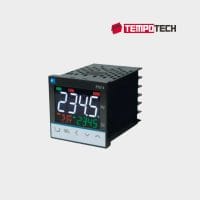
The Fuji Electric PXF4 temperature controller provides a variety of input and output options along with advanced control features, making it ideal for a broad spectrum of applications. You can select from…
Find more…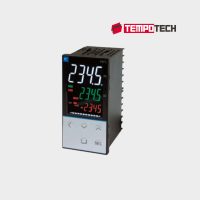
The Fuji Electric PXF4 temperature controller provides a variety of input and output options along with advanced control features, making it ideal for a broad spectrum of applications. You can select from…
Find more…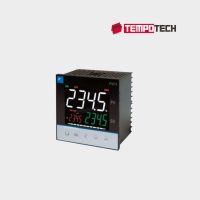
The Fuji Electric PXF4 temperature controller provides a variety of input and output options along with advanced control features, making it ideal for a broad spectrum of applications. You can select from…
Find more…Watch product overview, installation, and application videos for the MPTC-04 Thermocouple
A temperature transmitter takes the temperature data from a sensor, like an RTD or thermocouple, and converts it into a standard signal, usually 4-20mA or 0-10V. This signal can be sent to control systems, PLCs, or monitoring equipment to keep track of temperature in real-time.
Video Transcription: Temperature Transmitter Technology & Application
[00:05] A temperature transmitter is a critical component in industrial automation that converts low-level sensor signals into standardized outputs. This ensures accurate, reliable, and long-distance signal transmission for complex control systems.
[00:14] Thermocouple and RTD sensors are the industry standards for measuring the temperature of processed media. However, in challenging environments—characterized by high temperatures, electromagnetic interference (EMI), or long cable runs—the raw signals from these sensors can degrade.
[00:33] This signal degradation, often caused by wire resistance and electrical noise, can lead to inaccurate readings. To mitigate these issues, temperature transmitters are used to amplify, condition, and convert sensor data into a standardized 4-20mA output, ensuring high-integrity data across the plant.
[00:59] Several signal types are used depending on the application:
4 to 20 mA Analog Signal: The most common standard, highly resistant to noise and ideal for long distances.
0 to 10V: A common analog option, though more susceptible to signal loss over length.
Digital Signals (HART & Modbus): Used for advanced remote communication and diagnostics.
RS485/RS232: Essential for integrating transmitters with PLCs and SCADA systems.
[01:35] The Tempotech TT367 series temperature transmitters are engineered for versatility. They offer precise sensor-transmitter matching and robust protection against interference. Configurable via the HART protocol, these units allow for easy setup and reliable field operation.
[01:56] Key reliability features include open/short-circuit detection, incorrect wiring alerts, and NAMUR NE43 failure standards. The TT367 supports RTD, TC, Ohm, and Millivolt inputs, making it a universal solution for your instrumentation needs.
[02:26] With integrated dot-matrix displays and easy configuration options, our transmitters provide the precision you can trust. Contact our technical sales team today to find the best transmitter for your application.
Open the product configurator to select available options and prepare your configuration.
Find answers to common questions about the MPTC-04 Thermocouple
A guide tube multipoint thermocouple uses multiple thermocouple elements positioned at different sensing points within a single assembly. Each thermocouple is installed inside a guide tube, allowing temperature to be measured at several locations throughout the process
Guide tubes are positioned with separators inside the outer protection tube. Individual thermocouples are inserted into these guide tubes and arranged for direct contact with the outer sheath of the protection tube at the required sensing locations
ypical applications include distillation columns, reactors, heat exchangers, separation processes, polymerization and chemical processing, crude oil desalting, fluidized catalytic cracking (FCC), and visbreaking units
NEMA 4X and IP68 enclosure options are available for outdoor environments. CSA, ATEX and FM explosion-proof enclosures are also available for hazardous-location applications,, hazloc option is also available, Please contact sales.
Radiographic examination, pressure testing and NDT testing are available on request to support project-specific inspection and quality requirements.
Yes. Canadian Registration Number (CRN) availability can be provided on request for Canadian end-user applications where required. Project and installation requirements should be reviewed when specifying the assembly