
Reliable Surface Contact
The spring-loaded bayonet keeps the sensing tip firmly against the measurement surface, improving measurement consistency in vibrating equipment.


Adjustable Depth Bayonet Thermocouple with Connector for Reliable Industrial Temperature Measurement
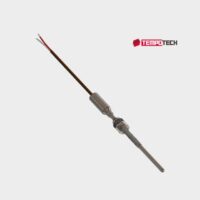
TheTC42 Adjustable Bayonet thermocouple with Connector is designed for accurate and dependable temperature measurement in industrial and OEM applications. Its adjustable bayonet twist-lock allows precise immersion depth for optimal sensor positioning, while the spring-loaded design provides secure contact and quick installation. Available in Type J, K, and T with multiple configurable options, the TC42 is built for reliable performance amidst demanding industrial environments.
The spring-loaded bayonet keeps the sensing tip firmly against the measurement surface, improving measurement consistency in vibrating equipment.

Easily position the sensing tip at the required depth using the adjustable bayonet twist-lock for accurate and repeatable temperature measurement

The spring-loaded bayonet design helps maintain consistent probe contact in applications exposed to vibration, reducing measurement fluctuations and improving process reliability

Choose from standard, miniature, high-temperature, and ultra-high-temperature connectors to match your installation requirements.

Manufactured with quality sheath materials including 304 SS, 316 SS, 310 SS, 321 SS, and Inconel 600 for dependable performance in demanding environments

Configure sheath material, probe diameter, immersion length, probe angle, junction type, and connector options to suit your application
 Plastic Injection
 Plastic Extrusion
 Packaging
 Rubber
 Heating Equipment
 Tooling, Dies & Molds
 Hot Runner Systems
Die Casting
Hot Runner Systems
Die Casting
Review the standard specifications and available configuration options for the TC42 Bayonet Thermocouple. Sheath diameter, insertion length, thermocouple type, lead wire, insulation, connector style, temperature rating, and optional features may vary depending on the selected configuration and application requirements
Technical specifications, dimensions, ordering information, and configuration options for the TC42 Thermocouple
Datasheets, drawings, manuals and software.

Technical specifications, dimensions, ordering information, and configuration options for the TC42 Thermocouple.
Download file →Spécifications techniques, dimensions, renseignements de commande et options de configuration pour le thermocouple TC42
Download file →Complete your installation with compatible mounting accessories, connectors, and replacement components for the TC11 Immersion Thermocouple.
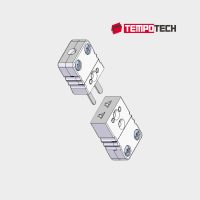
Application Connector for thermocouple and RTD circuits. Suited for small wires and mineral insulated cables. Construction Glass filled high quality thermoplastic body with original thermocouple material pins and spring loaded inserts. Type…
Find more…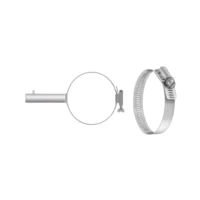 Read
Read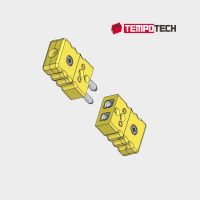
Connector for thermocouple and RTD circuits. Solid pin design ensures good contact even in demanding applications. Hollow pin design offers a good quality product at competitive pricing for less frequently used connectors.…
Find more…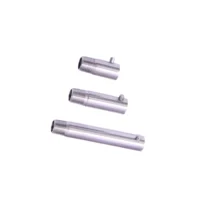 Read
ReadDiscover related products and accessories to complete your temperature measurement solution.
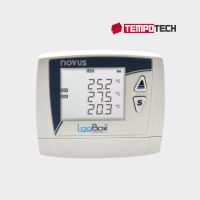
The LogBox Bluetooth is a multichannel IoT data logger designed for efficient and secure remote monitoring. Utilizing NB-IoT and Cat-M1 networks, it provides real-time data collection and transmission, ensuring high reliability and autonomy even in…
Find more…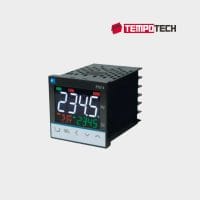
The Fuji Electric PXF4 temperature controller provides a variety of input and output options along with advanced control features, making it ideal for a broad spectrum of applications. You can select from…
Find more…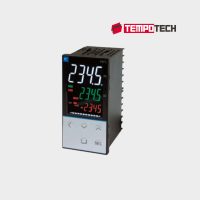
The Fuji Electric PXF4 temperature controller provides a variety of input and output options along with advanced control features, making it ideal for a broad spectrum of applications. You can select from…
Find more…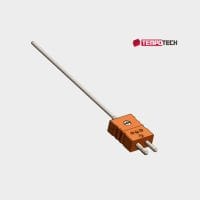 View Product
 View Product
Watch product overview, installation, and application videos for the TC11 Immersion Thermocouple
A temperature transmitter takes the temperature data from a sensor, like an RTD or thermocouple, and converts it into a standard signal, usually 4-20mA or 0-10V. This signal can be sent to control systems, PLCs, or monitoring equipment to keep track of temperature in real-time.
Video Transcription: Temperature Transmitter Technology & Application
[00:05] A temperature transmitter is a critical component in industrial automation that converts low-level sensor signals into standardized outputs. This ensures accurate, reliable, and long-distance signal transmission for complex control systems.
[00:14] Thermocouple and RTD sensors are the industry standards for measuring the temperature of processed media. However, in challenging environments—characterized by high temperatures, electromagnetic interference (EMI), or long cable runs—the raw signals from these sensors can degrade.
[00:33] This signal degradation, often caused by wire resistance and electrical noise, can lead to inaccurate readings. To mitigate these issues, temperature transmitters are used to amplify, condition, and convert sensor data into a standardized 4-20mA output, ensuring high-integrity data across the plant.
[00:59] Several signal types are used depending on the application:
4 to 20 mA Analog Signal: The most common standard, highly resistant to noise and ideal for long distances.
0 to 10V: A common analog option, though more susceptible to signal loss over length.
Digital Signals (HART & Modbus): Used for advanced remote communication and diagnostics.
RS485/RS232: Essential for integrating transmitters with PLCs and SCADA systems.
[01:35] The Tempotech TT367 series temperature transmitters are engineered for versatility. They offer precise sensor-transmitter matching and robust protection against interference. Configurable via the HART protocol, these units allow for easy setup and reliable field operation.
[01:56] Key reliability features include open/short-circuit detection, incorrect wiring alerts, and NAMUR NE43 failure standards. The TT367 supports RTD, TC, Ohm, and Millivolt inputs, making it a universal solution for your instrumentation needs.
[02:26] With integrated dot-matrix displays and easy configuration options, our transmitters provide the precision you can trust. Contact our technical sales team today to find the best transmitter for your application.
Open the product configurator to select available options and prepare your configuration.
Find answers to common questions about the TC11 Immersion thermocouple
The TC42 is available in Type J, Type K, and Type T thermocouple calibrations. The appropriate type depends on your operating temperature range, process environment, and application requirements. If you are unsure which thermocouple type is best, our technical team can help you select the right configuration.
The TC42 features an adjustable bayonet design that allows the immersion depth to be set during installation, ensuring the sensing tip is positioned at the correct measurement point. The spring-loaded bayonet provides up to 1 inch of compression, maintaining continuous pressure between the sensing tip and the measurement surface or sensing pocket. This helps minimize air gaps caused by vibration, thermal expansion, or equipment movement, resulting in more stable, repeatable, and reliable temperature measurements.
Yes. The TC42 can be configured with different sheath materials, probe diameters, immersion lengths, probe angles, junction styles, and connector options. This allows the sensor to be supplied for new OEM equipment or as a direct replacement for existing thermocouples.
For high-temperature applications, the thermocouple type is only one part of the selection process. You should also consider the sheath material, measuring junction, connector temperature rating, and the extension or lead wire insulation, as these components may have lower temperature limits than the sensing element itself. The operating environment, including oxidation, corrosion, vibration, pressure, and installation method, should also be evaluated to ensure long-term reliability. If you are unsure which configuration is best for your application, contact Tempotech Controls for technical assistance in selecting the most suitable thermocouple assembly.
The best choice depends on your application. Mineral Insulated (MgO) construction is recommended for higher temperatures, faster thermal response, greater mechanical strength, and applications exposed to vibration or harsh industrial environments. Tube & Wire construction is typically selected for lower-temperature applications where flexibility and cost are the primary considerations. If you are unsure which construction is best for your process, contact Tempotech Controls for application guidance and product selection.
Yes. Tempotech Controls can manufacture the TC42 to meet your application requirements, including custom probe lengths, sheath materials, connector styles, thermocouple types, and other configuration options. If your application has unique installation or process requirements, contact our engineering team for assistance.