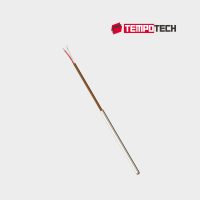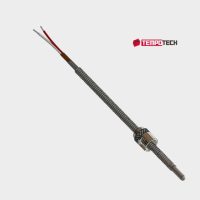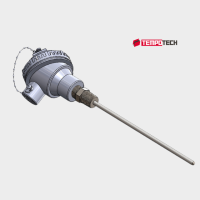

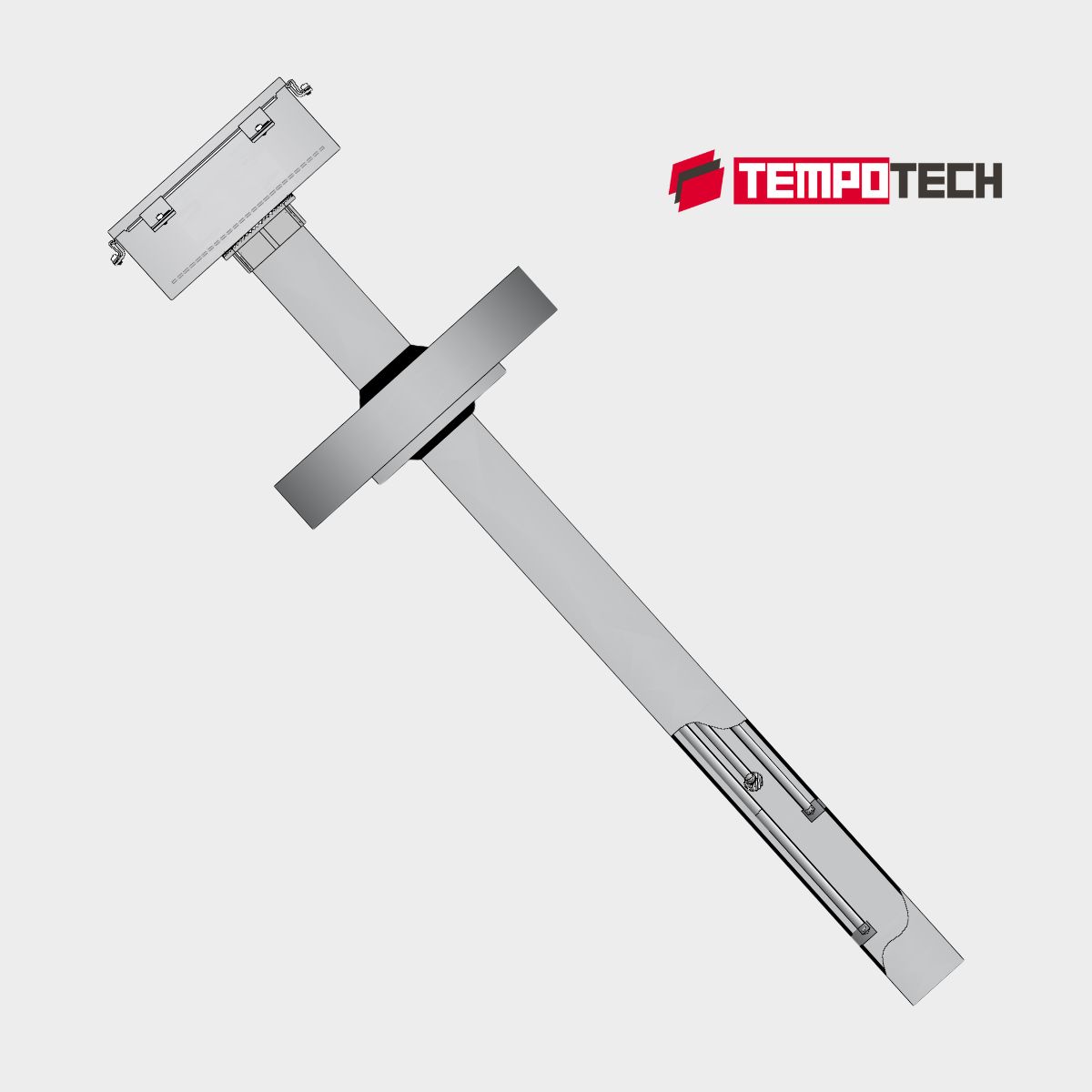
Multipoint temperature sensors provide accurate measurement at multiple points along a single probe, making them ideal for complex processes where temperature variations exist. They eliminate the need for multiple sensors, offering a cost-effective and space-saving solution while ensuring precise temperature profiling and improved process control. Designed for harsh industrial environments, they are widely used in applications requiring reliable and high-precision temperature monitoring.
Key Feature:-
- Available in Thermocouple Type K, J, T, N
- Wide range for diameter for sensing element from 0.020″ to 3/8″.
- A wide selection of sheath material to suit application requirement, 304ss, 316ss, 321ss, Inconel® 600, Incolloy 800, Monel, Pyrosil D etc.
- Grounded and Ungrounded junction to suite application requirement.
- Available with Aluminum, Stainless Steel, Cast Iron Enclosures
- NEMA 4X and IP68 rated enclosure for continuous use in out door environments.
- Available in IEC 60584 & ANSI MC 96.1 standard tolerances

Application Note

Multipoint temperature sensors are designed to provide accurate temperature measurement at multiple locations along a single probe, making them ideal for large and complex processes where temperature gradients naturally exist. In any heating or cooling system, temperature is never uniform, and relying on a single-point measurement may not capture critical variations that can impact product quality, safety, and process efficiency. Multipoint sensors eliminate the need for installing multiple individual sensors, offering a cost-effective and space-saving solution while enabling precise temperature profiling and tighter process control.
These sensors are constructed using mineral insulated (MGO) thermocouples housed within a protective tube, with sensing elements positioned at various points along the length. They are available in both free hanging and guide tube designs—free hanging types are economical and allow easy maintenance, as individual thermocouples can be replaced without removing the entire assembly, while guide tube designs offer better structural organization and handling. Multipoint sensors are suitable for harsh operating environments and can be customized based on temperature range, pressure, chemical exposure, response time, and number of sensing points required.
They are offered in thermocouple types K, J, T, and N, with sensing element diameters ranging from as small as 0.020 inches up to 3/8 inch. A wide range of sheath materials is available, including 304, 316, and 321 stainless steel, as well as high-performance alloys such as Inconel® 600, Incoloy 800, Monel, and Pyrosil D, ensuring compatibility with diverse industrial conditions. Junction options include grounded (for faster response and higher pressure capability) and ungrounded (for better electrical isolation and durability). The sensors come with various enclosure options such as aluminum, stainless steel, and cast iron, and are rated up to NEMA 4X and IP68 for reliable outdoor and harsh environment operation. They comply with international standards including IEC 60584 and ANSI MC 96.1, with calibration traceable to NIST up to 1200°C, and optional certifications such as CSA, ATEX, FM, and CRN for Canadian applications.
Multipoint temperature sensors are widely used in industries where precise temperature monitoring is critical, including chemical processing, petroleum refining, distillation columns, crude oil desalting, fluidized catalytic cracking units, visbreaking processes, reactors, and polymerization systems. They are also commonly applied in heat exchanger profiling, furnaces and kilns, semiconductor manufacturing, combustion research, storage tanks, and air flow ducts. Overall, these sensors play a crucial role in ensuring accurate, reliable, and efficient temperature control in demanding industrial applications.