
Adjustable Bayonet Lock
Maintains secure, spring-loaded contact with the bearing housing for accurate and reliable temperature measurement in high-vibration applications.


Spring-loaded bearing temperature sensor for motors, pumps, compressors, turbines, and rotating equipment
BRTD44 - Copper Tip RTD with Armor and Twist Lock Bayonet is a resistance temperature detector specifically designed for bearing temperature or other rotating shaft temperatures. The copper tip probe is inserted directly into drilled holes (such as bearing housing, machine components) or the process. The copper tip design allows small changes in temperature to be detected quickly, helping to avoid major damage to the bearing or shaft.
Maintains secure, spring-loaded contact with the bearing housing for accurate and reliable temperature measurement in high-vibration applications.

Fast Response – Quickly detects bearing temperature changes for improved equipment protection.

Available in Type J, K, E, N, and T thermocouples with custom sheath materials, probe lengths, lead wires, and terminations.

Stainless steel armored lead protects against abrasion, vibration, and mechanical damage.

Stable and reliable temperature measurement for critical bearing monitoring.

Available with bare ends, standard plugs, miniature plugs, and matching jack options for flexible installation.
 Electric Motors
 Power Generation
 Oil & Gas
 Pulp & Paper
 Chemical
 Water & Waste Water
BRTD44 – Copper Tip RTD with Armor and Twist Lock Bayonet is a resistance temperature detector specifically designed for bearing temperature or other rotating shaft temperatures. The copper tip probe is inserted directly into drilled holes (such as bearing housing, machine components) or the process. The copper tip design allows small changes in temperature to be detected quickly, helping to avoid major damage to the bearing or shaft.
The BTC44 is widely used in electric motors, pumps, compressors, gearboxes, turbines, generators, mining equipment, steel mills, paper mills, power plants, oil and gas facilities, conveyors, and other rotating machinery where continuous bearing temperature monitoring is essential. Accurate temperature measurement helps detect overheating caused by lubrication failure, excessive friction, shaft misalignment, bearing wear, overload conditions, or mechanical damage before catastrophic equipment failure occurs.
When connected to a PLC, DCS, SCADA, condition monitoring system, or Industrial IIoT platform, the BTC44 provides continuous real-time temperature data for process monitoring and predictive maintenance. Temperature trends can be analyzed to identify abnormal operating conditions, generate maintenance alarms, optimize maintenance intervals, reduce unplanned downtime, extend bearing life, and improve overall equipment reliability.
The BTC44 Bearing Thermocouple is manufactured for demanding industrial applications where accuracy, durability, fast response, vibration resistance, and long service life are critical for reliable temperature monitoring and equipment protection.
Product construction and performance details.
Access product datasheets, installation guides, manuals, certificates, CAD drawings, brochures, and other technical documents for the BTC44 Bearing Thermocouple.
Browse compatible spare parts and accessories designed to support the installation, maintenance, and long-term performance of the BTC44 Bearing Thermocouple.
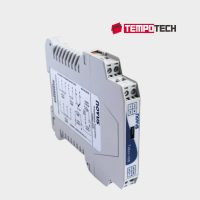
Temperature transmitter TxIsoRail-HRT combines the proven quality of HART® certification with the robustness of NOVUS devices. The transmitter is compatible with HART® certified devices and it has electrical isolation between input and output, supporting voltage surges…
Find more…Explore related Tempotech Controls products that complement the BTC44 Bearing Thermocouple or provide alternative solutions for your temperature monitoring application.
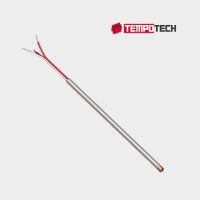
BRTD Tip Sensitive Copper Tip Bearing RTD with Electrically Isolated Tip is a resistance temperature detector specifically designed for bearing temperature or other rotating shaft temperatures. Key Features: Available in types: Pt100,…
Find more…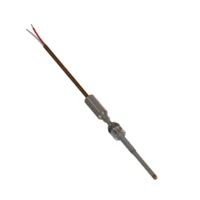 View Product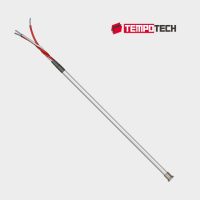
EMB-RTD ; Embedment style resistance temperature detector specifically designed for bearing temperature or other rotating shafts temperature. Probe tip is inserted directly into drilled holes (such as bearing housing,machine components) or the…
Find more…In this video, we dive into the concept of drift in temperature sensors, specifically focusing on RTD (Resistance Temperature Detector) sensors. Drift refers to the gradual changes in the sensor's resistance that can lead to inaccurate temperature readings, and it can significantly impact your system's performance.
In this video, we dive into the concept of drift in temperature sensors, specifically focusing on RTD (Resistance Temperature Detector) sensors. Drift refers to the gradual changes in the sensor's resistance that can lead to inaccurate temperature readings, and it can significantly impact your system's performance.
Accurate temperature measurement is crucial across all industries, but over time, RTD sensors can experience drift, leading to unreliable and inaccurate readings. Let’s dive into what causes RTD drift and how to effectively mitigate it.
[00:20] RTD drift refers to the gradual change in an RTD sensor's electrical resistance, which results in skewed temperature data. This drift can be categorized into two main types:
Permanent Drift [00:35]: A long-term shift in the sensor’s resistance, often caused by sensor degradation, aging, or physical damage. This results in a permanent error that requires professional recalibration or a full sensor replacement.
Temporary Drift [00:45]: This occurs due to external factors like extreme temperature fluctuations, electromagnetic interference (EMI), or mechanical stress. This type of drift is often reversible once the sensor returns to a stable environment.
[01:03] What causes these inaccuracies?
Aging: Over time, platinum elements naturally degrade, contributing to permanent drift.
Temperature Extremes: Exposure to temperatures outside the design range can damage the PT100/PT1000 element.
Vibration & Mechanical Stress: Physical stress can lead to temporary fluctuations and unstable readings.
Contamination: Dirt, moisture, or chemicals on the sensor can change resistance levels, leading to temporary drift.
[01:33] To minimize drift and ensure process efficiency, follow these best practices:
Regular Calibration: Periodically test sensors against traceable standards to correct for drift.
Stable Environment: Maintain a controlled environment to avoid unnecessary thermal shocks.
Proper Installation: Ensure sensors are securely mounted to avoid vibration-induced stress.
Routine Maintenance: Inspect for signs of wear or contamination to prevent permanent sensor failure.
[02:17] Understanding both permanent and temporary drift helps you maintain optimal sensor performance. Tempotech Controls provides expert in-house and on-site calibration services to keep your systems accurate.
[02:27] Contact our sales team today for more information or visit www.tempotechcontrols.com.
Find answers to the most frequently asked questions about the BTC44 Bearing Thermocouple, including installation, specifications, applications, customization, and technical support.
The BTC44 Bearing Thermocouple is a spring-loaded temperature sensor with an adjustable bayonet lock designed to monitor bearing temperatures in motors, pumps, compressors, turbines, generators, and other rotating equipment. It provides continuous temperature measurement to help prevent overheating and unexpected equipment failure.
The adjustable bayonet mechanism uses a spring-loaded design to maintain constant contact between the sensor tip and the bearing housing. This ensures accurate temperature measurement while allowing quick installation and easy adjustment for different mounting depths.
The BTC44 is available in Type J, K, E, N, and T thermocouple calibrations. The appropriate type depends on the operating temperature range, environmental conditions, and application requirements.
The BTC44 is commonly used for bearing temperature monitoring in electric motors, pumps, compressors, turbines, generators, gearboxes, conveyors, fans, mining equipment, and other rotating machinery.
Yes. The BTC44 can be custom manufactured with different probe lengths, sheath diameters, sheath materials, junction types, lead wire insulation, connectors, and mounting configurations to meet specific application requirements.
Yes. The BTC44 can be connected to PLCs, DCS, SCADA systems, temperature controllers, data loggers, and Industrial IIoT monitoring platforms for continuous temperature monitoring and predictive maintenance.