
Rugged MgO Construction
MgO mineral insulated construction withstands vibration, thermal cycling, and harsh industrial operating conditions for dependable long-term performance.


Threaded Nozzle Melt Thermocouple for Accurate Plastic Processing Temperature Measurement
Preserving accurate nozzle temperature is vital for consistent melt quality and reliable plastic processing. The TC22 Threaded Nozzle Melt Thermocouple is designed to measure melt temperature directly at the nozzle, helping improve process stability, reduce temperature variation, and support consistent production quality. Its rugged MgO mineral insulated construction provides excellent resistance to vibration, thermal cycling, and harsh industrial environments, rendering it suitable for continuous operation on injection molding machines, plastic extrusion equipment, and other polymer processing systems. Available in Type J and Type K thermocouples with configurable thread sizes, lead wire lengths, insulation materials, and connector options, the TC22 can be customized to meet OEM and replacement requirements while delivering dependable, long-term temperature measurement performance.
MgO mineral insulated construction withstands vibration, thermal cycling, and harsh industrial operating conditions for dependable long-term performance.

Optimized sensing tip design delivers rapid response to changing melt temperatures, improving process control and production consistency.

hreaded nozzle design positions the sensing tip directly in the melt stream for accurate and repeatable temperature measurement

Choose bare ends, standard, miniature, or high-temperature connectors for easy integration with existing control systems

Available in Type J and Type K thermocouples for reliable temperature measurement across demanding plastic processing applications.
Configure thread size, probe length, thermocouple type, lead wire, insulation, and connector options for your application.
 Plastic Injection
 Plastic Extrusion
 Polymer Processing
 Blow Molding
 Hot Runner
 Rubber
 Mold & Die
 OEM Machine
Review the standard specifications and available configuration options for the TC22 Thermocouple. Sheath diameter, insertion length, thermocouple type, lead wire, insulation, connector style, temperature rating, and optional features may vary depending on the selected configuration and application requirements
Technical specifications, dimensions, ordering information, and configuration options for the TC22 Thermocouple

Installation, wiring, maintenance, and troubleshooting instructions for the TC22 Thermocouple.
Download file →Instructions d'installation, de câblage, de maintenance et de dépannage pour le thermocouple de palier TC22
Download file →Complete your installation with compatible mounting accessories, connectors, and replacement components for the TC22 Thermocouple.
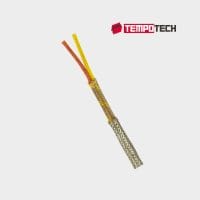
FG: FG-Glass Fiberglass. Individual conductors are insulated with general purpose fiberglass and with an overall fiberglass jacket. It is Most popular and widely applied of all glass insulations. A color-coded fiberglass braid…
Find more…
Application Connector for thermocouple and RTD circuits. Suited for small wires and mineral insulated cables. Construction Glass filled high quality thermoplastic body with original thermocouple material pins and spring loaded inserts. Type…
Find more…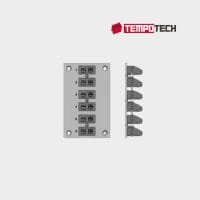
Multi Jack panel for thermocouples and RTDs. Can be connected upto 6 or custom number of sensors simultaneously. Construction Anodized aluminium plate. Available in 1 thru 6 circuits version. Corresponds with standard…
Find more…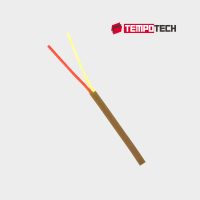
PFA: Color-coded PFA Teflon® is extruded over each single conductor. The single insulated conductors are laid parallel and insulated with an extruded jacket of PFA Teflon® Key Features Rated for continuous use…
Find more…
Connector for thermocouple and RTD circuits. Solid pin design ensures good contact even in demanding applications. Hollow pin design offers a good quality product at competitive pricing for less frequently used connectors.…
Find more…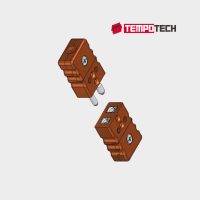
Connector for thermocouple and RTD circuits. Solid pin design ensures good contact even in demanding applications. Hollow pin design offers a good quality product at competitive pricing for less frequently used connectors.…
Find more…Discover related products and accessories to complete your temperature measurement solution.
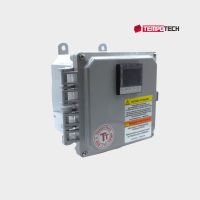
TempoTech offer custom enclosure and control panels with CSA electrical approvals. Available Materials: FRP, PVDF, Coated Steel, Stainless Steel Approvals and Protection: NEMA 4X, IP68, Electrical Approvals Options: With single or multiple…
Find more…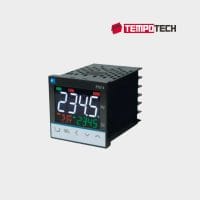
The Fuji Electric PXF4 temperature controller provides a variety of input and output options along with advanced control features, making it ideal for a broad spectrum of applications. You can select from…
Find more…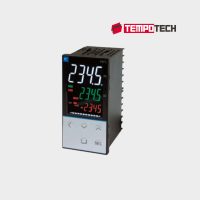
The Fuji Electric PXF4 temperature controller provides a variety of input and output options along with advanced control features, making it ideal for a broad spectrum of applications. You can select from…
Find more…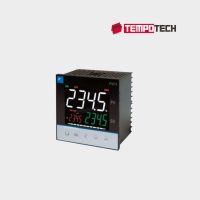
The Fuji Electric PXF4 temperature controller provides a variety of input and output options along with advanced control features, making it ideal for a broad spectrum of applications. You can select from…
Find more…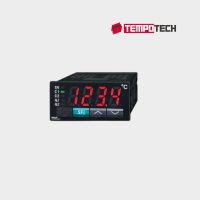
The Fuji Electric PXR3 temperature controller provides a variety of input and output options along with advanced control features, making it ideal for a broad spectrum of applications. You can select from…
Find more…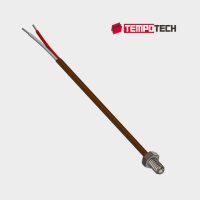 View Product
TC23- A bolt-style thermocouple is a specialized temperature sensor that incorporates a thermocouple junction within a bolt or screw, enabling precise surface temperature measurement. This design allows for secure installation onto equipment,…
Find more…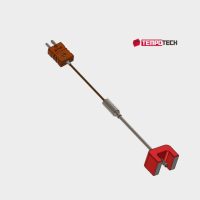
TC-31 A Magnet Thermocouple is a specialized type of thermocouple sensor designed to measure surface temperatures by attaching magnetically to ferromagnetic materials. It combines the functionality of a standard thermocouple with the…
Find more…Watch product overview, installation, and application videos for the T22 Thermocouple
PT2M44S
A temperature transmitter takes the temperature data from a sensor, like an RTD or thermocouple, and converts it into a standard signal, usually 4-20mA or 0-10V. This signal can be sent to control systems, PLCs, or monitoring equipment to keep track of temperature in real-time.
Video Transcription: Temperature Transmitter Technology & Application
[00:05] A temperature transmitter is a critical component in industrial automation that converts low-level sensor signals into standardized outputs. This ensures accurate, reliable, and long-distance signal transmission for complex control systems.
[00:14] Thermocouple and RTD sensors are the industry standards for measuring the temperature of processed media. However, in challenging environments—characterized by high temperatures, electromagnetic interference (EMI), or long cable runs—the raw signals from these sensors can degrade.
[00:33] This signal degradation, often caused by wire resistance and electrical noise, can lead to inaccurate readings. To mitigate these issues, temperature transmitters are used to amplify, condition, and convert sensor data into a standardized 4-20mA output, ensuring high-integrity data across the plant.
[00:59] Several signal types are used depending on the application:
4 to 20 mA Analog Signal: The most common standard, highly resistant to noise and ideal for long distances.
0 to 10V: A common analog option, though more susceptible to signal loss over length.
Digital Signals (HART & Modbus): Used for advanced remote communication and diagnostics.
RS485/RS232: Essential for integrating transmitters with PLCs and SCADA systems.
[01:35] The Tempotech TT367 series temperature transmitters are engineered for versatility. They offer precise sensor-transmitter matching and robust protection against interference. Configurable via the HART protocol, these units allow for easy setup and reliable field operation.
[01:56] Key reliability features include open/short-circuit detection, incorrect wiring alerts, and NAMUR NE43 failure standards. The TT367 supports RTD, TC, Ohm, and Millivolt inputs, making it a universal solution for your instrumentation needs.
[02:26] With integrated dot-matrix displays and easy configuration options, our transmitters provide the precision you can trust. Contact our technical sales team today to find the best transmitter for your application.
Open the product configurator to select available options and prepare your configuration.
Find answers to common questions about the TC22 thermocouple
Select the thermocouple based on the thread size, thermocouple type (J or K), junction style, probe angle, tip length, immersion depth, lead wire insulation, and operating temperature. Matching these parameters to your equipment helps improve measurement accuracy, sensor life, and process stability.
Both sensors measure melt temperature using a threaded mounting design. A nozzle melt thermocouple is typically installed at the machine nozzle to monitor melt temperature before injection or extrusion, while a melt bolt thermocouple is commonly mounted in barrels, adapters, or process components where continuous melt temperature monitoring is required. The correct choice depends on the equipment design and measurement location.
Yes. The TC22 can be customized with different thread sizes, probe angles (straight, 45°, or 90°), tip lengths, immersion lengths, lead wire lengths, insulation materials, connectors, and thermocouple types to meet OEM specifications or replace existing sensors without modifying equipment.
Install the thermocouple using the correct thread engagement and immersion depth, ensure the sensing tip is positioned in the melt flow, and select the proper thermocouple type, junction style, and insulation for the operating environment. Proper installation and configuration help improve measurement repeatability, reduce sensor wear, and extend service life.
The TC22 is available with welded or brazed tip construction. For high-pressure plastic processing applications, welded construction generally provides greater mechanical strength and durability. The appropriate choice depends on the process pressure, operating conditions, and OEM design requirements.
The TC22 is available with PTFE (205°C), high-temperature PTFE (260°C), and fiberglass (510°C) insulation. The correct insulation should be selected based on the ambient temperature around the nozzle, cable routing, and exposure to heat, abrasion, or mechanical movement.