Ask. Learn. Decide—our AI makes it easy
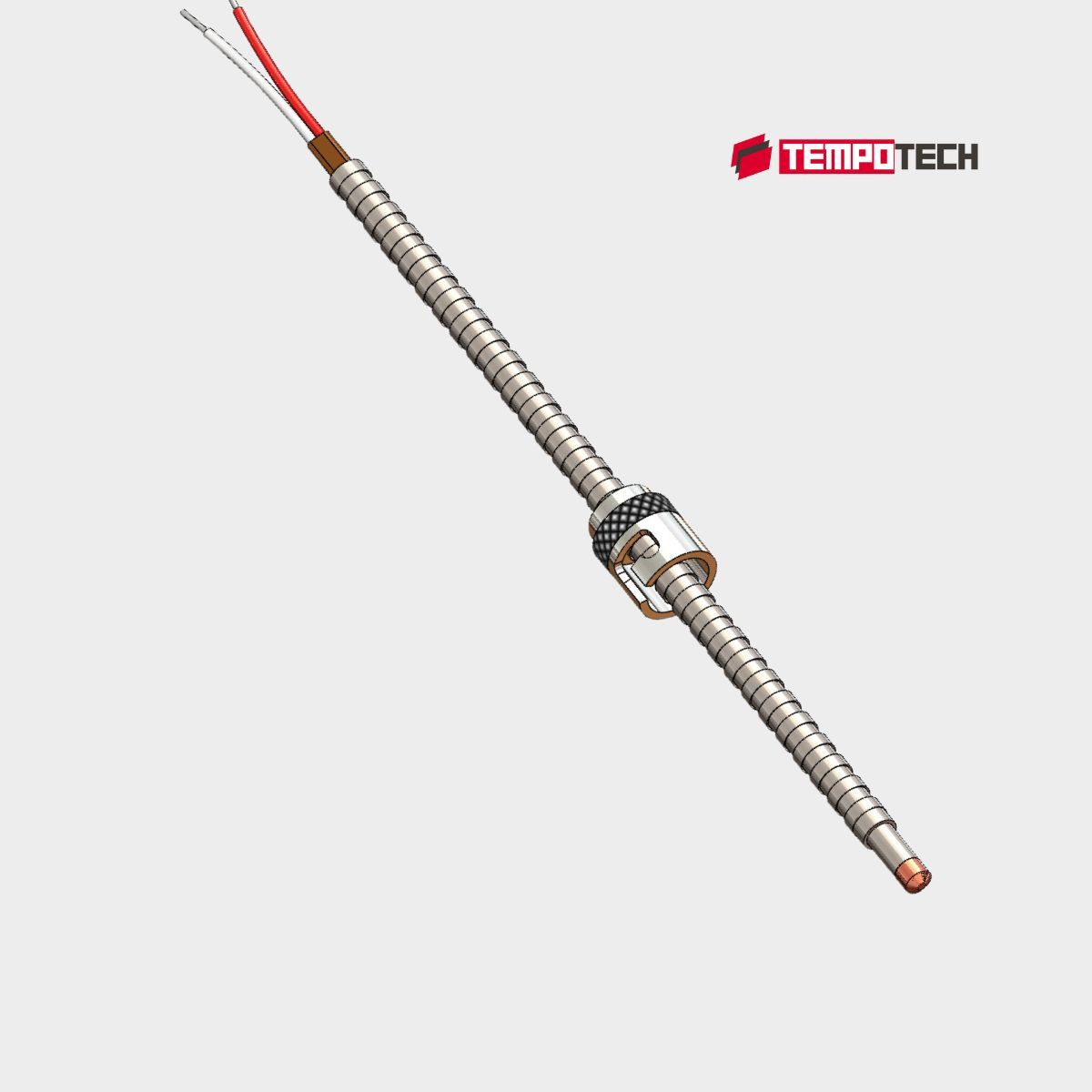
The BTC44 bearing thermocouple is a copper-tip temperature sensor with a stainless steel armored lead, designed for accurate monitoring of bearing temperatures in industrial equipment such as motors, pumps, compressors, gearboxes, and turbines. Its primary purpose is to detect overheating conditions early, helping prevent equipment failure and unplanned downtime while supporting predictive maintenance. The sensor features a spring-loaded copper tip that maintains constant contact with the bearing surface for improved heat transfer and fast response. A bayonet locking mechanism allows quick and secure installation without special tools, while the armored cable provides strong protection against mechanical damage. The ungrounded junction design minimizes electrical interference and enhances measurement stability. The thermocouple is available in Type K, J, and T, with Type K being the most commonly used, and supports temperature limits up to 205°C with Teflon wire and up to 510°C with fiberglass insulation.
For installation, first ensure the correct thermocouple type, probe length, and temperature rating are suitable for the application, and verify that the mounting location is clean and accessible. Insert the probe into the designated bearing housing port, ensuring the copper tip makes proper contact with the bearing surface. Secure the sensor by engaging and twisting the bayonet cap until it locks firmly, allowing the spring mechanism to apply consistent pressure without forcing it. If required, use a threaded or hose clamp adapter to stabilize the installation and prevent vibration. Route the armored cable carefully, keeping it away from moving parts, sharp bends, and sources of electrical interference, and secure it with clamps as needed. Connect the sensor to the monitoring device, such as a PLC or temperature controller, ensuring correct polarity based on the thermocouple type and using the appropriate termination. Finally, check that the installation is mechanically secure, confirm stable and accurate temperature readings, and perform a functional test if possible. Regular inspection and maintenance are recommended to ensure continued reliability and performance.